


This year marks 25 years since the September 11 attacks in New York City. A day that would change the course of history forever and claimed the lives of nearly 3,000 people. However, within the shadows of these horrific terrorist attacks are the forgotten victims still paying the price for crimes they have not been charged with.
Today, a Palestinian man named Zayn al-Abidin Muhammad Husayn, commonly known as Abu Zubaydah, sits in the Guantánamo Bay detention facility in Cuba, where he has been held without charge since 2006. The facility was created in 2002 to hold people captured during the War on Terror. Known around the world for indefinite detention, allegations of torture, and disputes over the legal rights of detainees, the legal status of those held at Guantánamo has been the subject of decades of litigation and worldwide scrutiny.
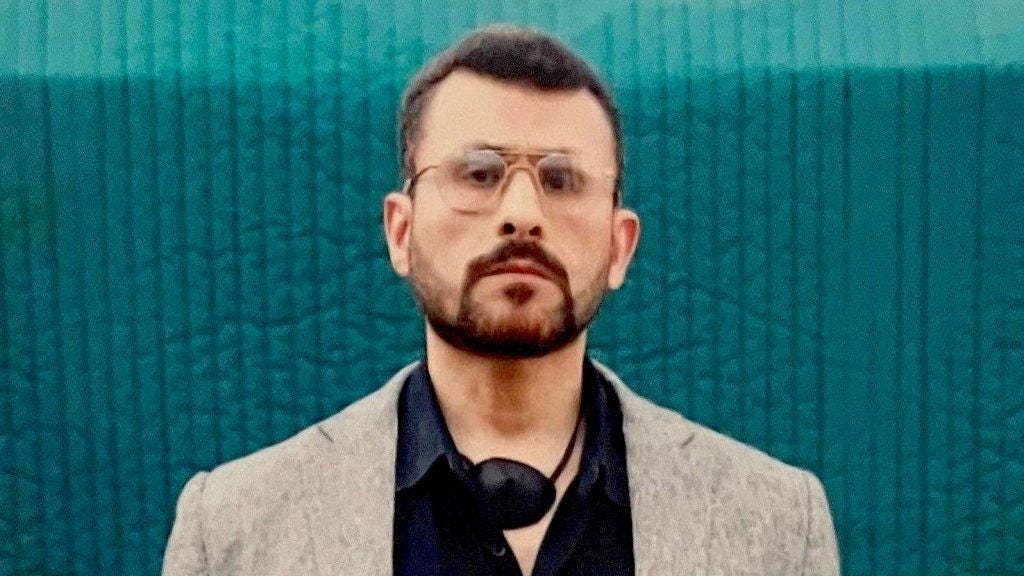
Accused by U.S. authorities of being a senior al-Qaeda operative, Zubaydah was captured during a raid on a safe house in Faisalabad, Pakistan, on March 28, 2002. He was shot during the operation, treated at a hospital in Lahore, Pakistan, and then transferred into CIA custody, where he was held in a network of secret detention facilities. After more than four years in secret CIA detention, he was transferred to Guantánamo Bay in September 2006 along with 13 other CIA high-value detainees.
Not to be forgotten: hundreds of other detainees were also held at Guantánamo. According to a 2010 Justice Department review, the facility had detained 779 individuals since 2002. Mansur Ahmad Saad al-Dayfi (also known as Mansoor Adayfi online), a former Guantánamo detainee, was initially accused of being part of the al-Qaeda terrorist network. He was later cleared for transfer from U.S. custody after suffering what he describes as unforgivable torture at Guantánamo Bay, where he was held for 14 years. Adayfi claims in his book, Don’t Forget Us Here: Lost and Found at Guantanamo, that during the post-9/11 raids in Afghanistan, he was kidnapped by warlords and sold to the U.S. after 9/11 and was presented to U.S. forces as a senior Egyptian al-Qaeda operative.
Adayfi told me in a Zoom interview on August 19 that there were more than “1,000 people” there, disputing the commonly cited figure of roughly 700 detainees. He also said he later heard from other inmates that babies had been present, although he did not personally see them. To date, only five of the 14 high-value detainees were actually charged in the 9/11 case.
The Story of Abu Zubaydah
Zubaydah was initially characterized by the CIA as one of al-Qaeda’s highest-ranking figures. According to U.S. intelligence assessments, a source claimed that he was the “third or fourth” highest-ranking al-Qaeda leader. However, the CIA later acknowledged that its initial assessment of Zubaydah as a senior al-Qaeda leader was incorrect.
The documentary record indicates that Zubaydah was involved in military training in Afghanistan and Pakistan and had contact with people associated with al-Qaeda. That alone does not establish that he was a member of al-Qaeda or an orchestrator of 9/11. Even after the CIA characterization stuck for years, doubts emerged among U.S. officials about the extent of his role.
During his interrogations, Zubaydah provided information about al-Qaeda’s organizational structure and operatives, including identifying Khalid Sheikh Mohammed (“KSM”) as “Mukhtar,” the name used for the alleged mastermind of the 9/11 plot. The important distinction to note here is that a person knowing al-Qaeda members and possessing intelligence about al-Qaeda is not necessarily the same thing as being a member or senior leader of al-Qaeda.
As Adayfi recalls in his book, “You don’t think in the military, you only do.”
In Zubaydah’s 2007 Combatant Status Review Tribunal statement, he says, “since back when I was a child, I liked a lot of things in your country and your history and your culture.” He then goes on to address the difference between the American people and culture and the U.S. government and military.
A personal journal entry dated 1998 describes watching the American movie Rambo III. He says he remembered being astonished by the American movie with “blood, explosions and excitement.” Yet, years later, when he watched it again, he found it so absurd that he laughed loudly.
“Back then, I was astonished over the extent of blood, explosions and excitement in that movie like most American movies…” he writes. “Today and after all these years … I watched this movie and I laughed loudly … I laughed … I laughed … My eyes became teary because of the deep laugh …”
By 2006, U.S. intelligence continued to characterize Zubaydah as a senior al-Qaeda figure, while other assessments and later reporting challenged that characterization. He was never criminally charged or convicted of being an al-Qaeda member at Guantánamo.
Zubaydah has never been released from Guantánamo Bay.
CIA Interrogation Techniques and Historical Parallels to MKUltra
Zubaydah was subjected to some of the most extensively documented torture in the post-9/11 U.S. detention program. This included 83 accounts of waterboarding, walling, in which interrogators slammed him against a flexible wall, cramped confinement in boxes, sleep deprivation, being placed in shackles and forced to remain in painful positions, assault, sensory manipulation involving loud or continuous noise, forced nudity, and prolonged isolation. According to the Senate Intelligence Committee’s report, he spent a total of 266 hours in a large confinement box and another 29 hours in a smaller box. The techniques were used in combinations over extended periods; Zubaydah later depicted his experiences in drawings that became known collectively as The Vortex.
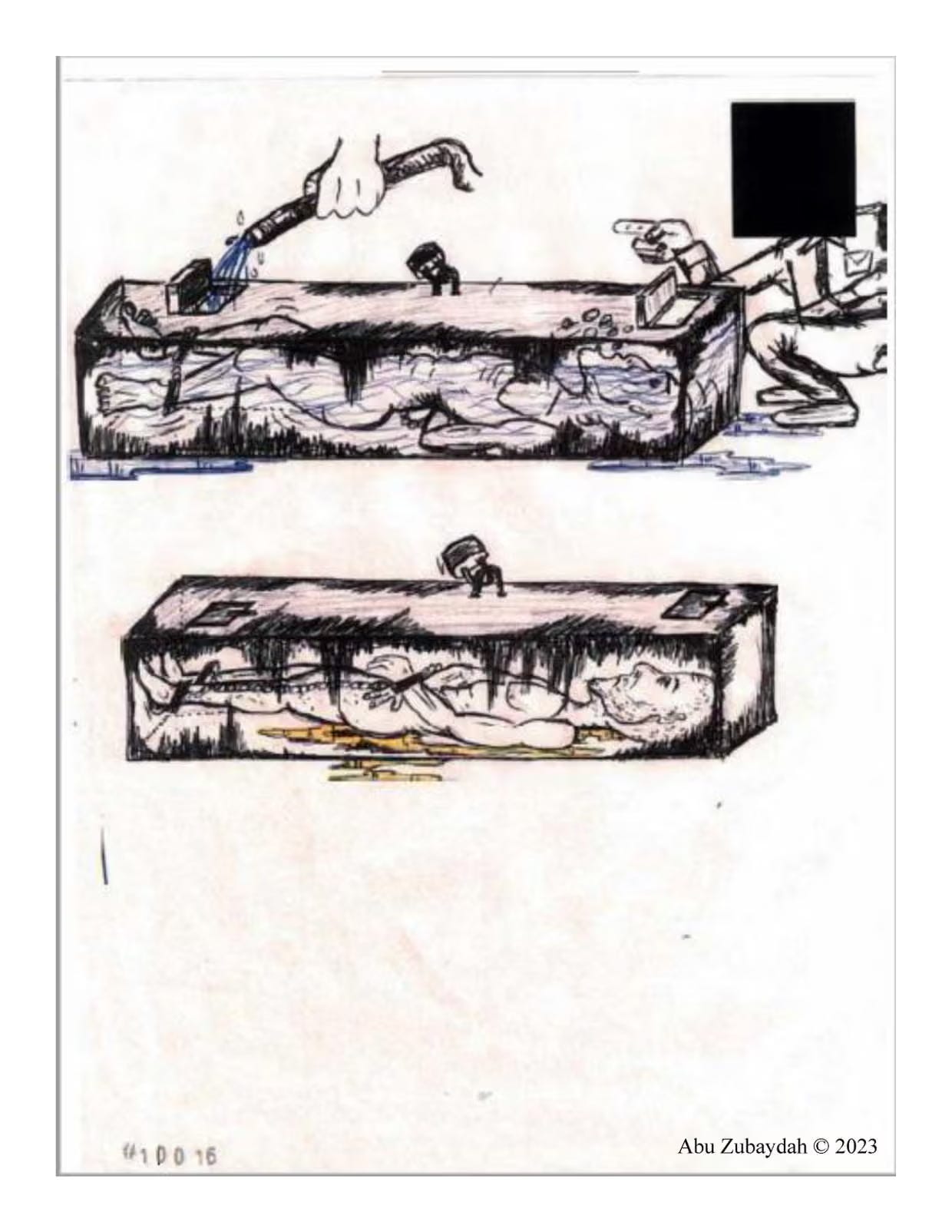
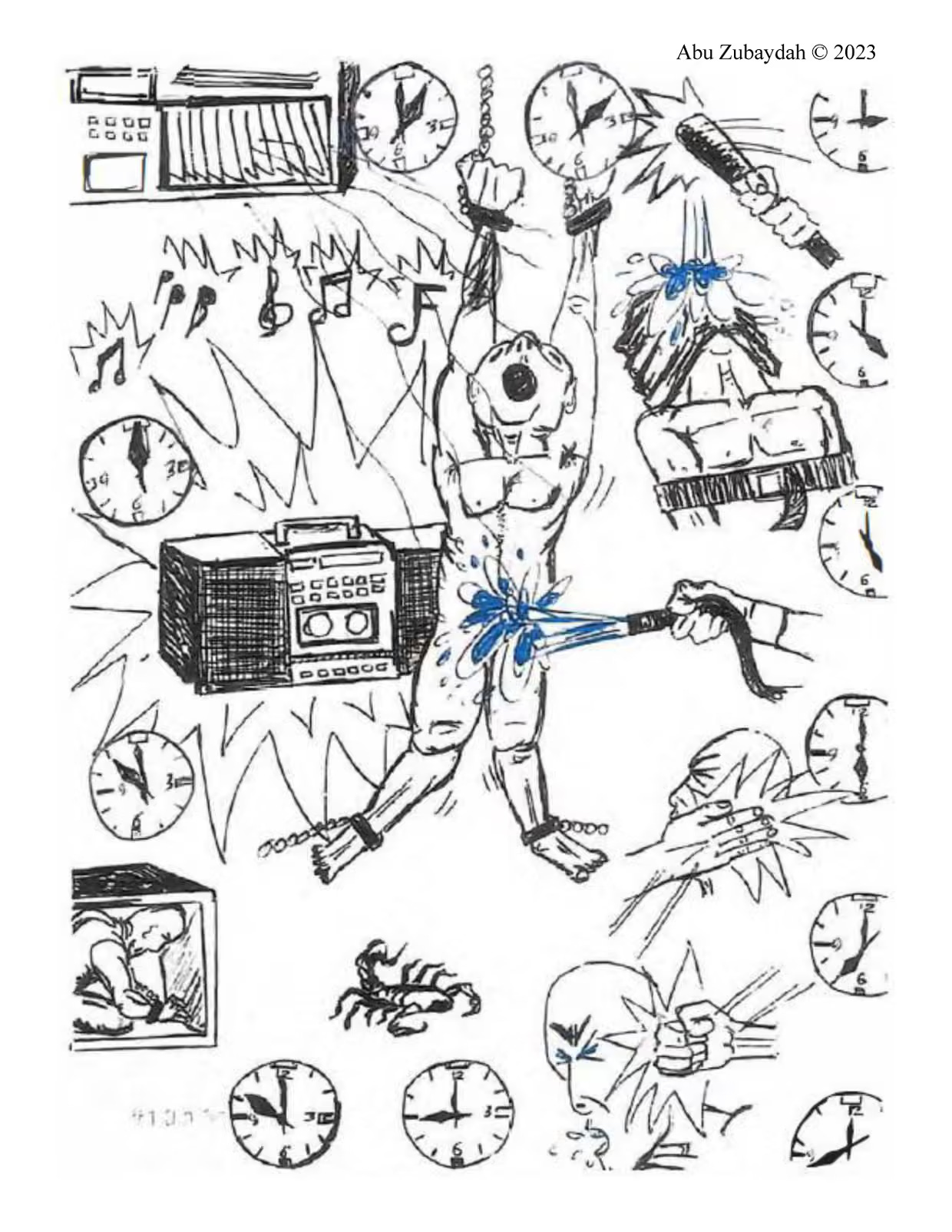
The Senate Intelligence Committee addressed the CIA’s interrogation program as: “The interrogations of CIA detainees were brutal and far worse than the CIA represented to policymakers and others.”
Some of the techniques used against Zubaydah bear similarities to methods investigated during the CIA’s earlier MKULTRA program, particularly the use of sensory manipulation and attempts to disrupt a person’s psychological state. The roughly 20-year MKULTRA program, which began in 1953 and was officially terminated in the early 1970s, investigated methods including sensory deprivation, sleep disruption, and psychoactive drugs such as LSD in efforts to study and manipulate human behavior. Additionally, the CIA incorporated elements of SERE training (Survival, Evasion, Resistance, and Escape), which was created to teach U.S. military personnel how to resist abusive interrogation if captured. The historical parallel is that both sets of research and training involved attempts to understand or alter how people respond to extreme psychological and physical stress.
Zubaydah was moved from Camp 7 to Camp 5 after Camp 7 was closed in 2021. To this day, UN experts have stated that “Mr. Abu Zubaydah suffers serious health conditions, including injuries sustained during torture that are allegedly exacerbated by the denial of medical attention. In addition, lawyer-client communication has been seriously impeded.” His treatment has been described by UN experts as raising serious human-rights concerns.
“He has blinding headaches, suffers seizures, has permanent brain damage and memory loss as a result of trauma during interrogation,” says his lawyer in a statement.
Did the CIA torture a man with a mental health disorder?
One of the more controversial aspects of Zubaydah’s case concerns claims that he experienced significant mental-health problems before he was captured and detained. There have been claims that Zubaydah has Dissociative Identity Disorder (DID), also commonly known as “multiple personality disorder.”
These claims and accounts come from intelligence officials and journalist Ron Suskind’s 2006 book, The One Percent Doctrine: Deep Inside America’s Pursuit of Its Enemies Since 9/11. Suskind noted that journals were found after Zubaydah’s capture and were written in voices or different identities that he labeled Hani 1, Hani 2, and Hani 3. It was also reported that FBI al-Qaeda analyst Dan Coleman described Zubaydah as “insane, certifiable, split personality.” However, a background U.S. counterterrorism source who would not go on the record told The Washington Times that Suskind’s account was wrong and argued that Zubaydah was actually a senior al-Qaeda figure. The available public record does not establish a formal clinical diagnosis of DID.
Experimental Jail
The question arises: what role, if any, did Zubaydah’s reported mental-health problems play in his detention and interrogation?
Former detainees have described Guantánamo as a place where coercive interrogation methods, behavioral techniques, and, according to some accounts, drugs were used to control detainees. Records surrounding the U.S. interrogation program also document the development, adaptation, and use of behavioral and psychological techniques on detainees.
There is no public evidence establishing that Zubaydah was deliberately selected as a human test subject because of an alleged diagnosis of DID. However, accounts from former detainees and records surrounding the interrogation program raise broader questions about the use of experimental or coercive techniques on detainees.
Former inmate Jamal al-Harith told Human Rights Watch that he was threatened with being injected with drugs if he did not answer questions. Adayfi, on Zoom with me, claimed that while he was detained, he and other inmates were given injections of drugs that would make them unable to move or feel paralyzed and that the injections were incredibly painful.
The United Nations Has Called for Abu Zubaydah’s Release. Why Is He Still at Guantánamo?
In January 2025, United Nations experts called for the release of Zubaydah. In a press release, the experts stated, “We are exceptionally requesting a Presidential pardon for Mr. Abu Zubaydah, owing to his treatment while in detention and the lack of due process since he was first detained.” The experts added that his “immediate release and relocation to a third safe country are long overdue.”
Exactly one year later, Zubaydah received a “substantial” compensation payment from the UK as part of a settlement of his legal claim concerning alleged British complicity in his torture.
“The compensation is important, it’s significant, but it’s insufficient,” Prof Helen Duffy, international legal counsel for Zubaydah, told the BBC. “These violations of his rights are not historic; they are ongoing.”
For legal reasons, the exact amount Zubaydah received could not be disclosed publicly, said Duffy. Zubaydah confirmed it was a “substantial amount of money.”
Dominic Grieve, who chaired a parliamentary committee, stated that what happened to Zubaydah was “plainly” wrong.
Then why is Zubaydah still imprisoned in Guantánamo Bay if he has never been charged with a crime? The U.S. government has asserted that Zubaydah is subject to detention under the 2001 Authorization for Use of Military Force and the laws of war, rather than being held pursuant to a criminal conviction. This means his detention does not depend on a criminal conviction or sentence and could continue indefinitely under the U.S. government’s law-of-war detention authority, without a criminal trial.
More Than One Victim at Guantánamo Bay
Throughout this article, only a few Guantánamo detainees who experienced serious abuse are discussed by name. But they were far from the only people affected by the detention system. Other former and current detainees whose experiences deserve to be remembered and examined include Mohamedou Ould Slahi, Mohammed al-Qahtani, Shaker Aamer, Sami al-Hajj, Lakhdar Boumediene, Musa’ab al-Madhwani, Murat Kurnaz, Omar Khadr, Ahmed al-Darbi, Sanad al-Kazimi, and Ghaleb al-Bihani.
American Lives Lost on 9/11
With the knowledge that others around the world also faced hardships during 9/11, this does not diminish the fact that thousands of Americans lost their lives that day, along with their loved ones, mothers, fathers, sons, daughters, grandparents, servicemen, and servicewomen. But it does show how horribly this atrocity has affected people around the world. The fact is, terrorism did this to everyone; extremism can kill and leave no prisoners.
But does this mean that those who have done nothing wrong should still have to pay the consequences? Should innocent people from any nation be forced to carry the fallout for something they never did, just because they might be in the wrong place, know the wrong person, or be there at the wrong time? Or are multiple intelligence agencies within the U.S. government at fault for a lack of communication and false accusations?
The 9/11 court cases and investigations have been unfolding for decades, and hopefully, one day, the intelligence and military officials who approved, designed, or participated in torture will be prosecuted and held accountable for serious human-rights abuses. Along with the American people, the victims and their families deserve answers, and the public deserves to know how such failures were allowed to happen to innocent people and how they can be prevented from happening again.
Chrissy Newton is a PR professional and founder of VOCAB Communications. She hosts the Rebelliously Curious podcast, which can be found on The Debrief’s YouTube Channel. Follow her on X: @ChrissyNewton and at chrissynewton.com.
This article was hard to read for me and it made me quite upset 😡 😕